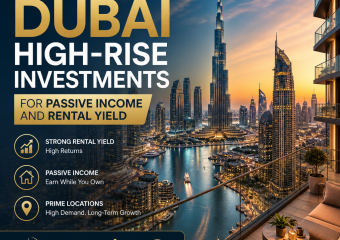


Dubai Real Estate Market Trends Every Investor Should Watch in 2025
Dubai Real Estate Market Report: Key Trends Every Investor Should Watch
Dubai’s property market continues to attract global investors, residents, and businesses. Population growth, new infrastructure, and a steady pipeline of residential and commercial projects are reshaping demand across the emirate. At the same time, changing supply, financing costs, and international economic conditions make careful research essential.
This Dubai real estate market report highlights the major trends investors should monitor when assessing opportunities.

Strong Demand, With More Selective Buyers
Dubai’s expanding population and appeal to international residents have supported demand for homes, particularly in well-connected communities. Buyers are increasingly weighing practical factors such as schools, transport links, retail access, and proximity to employment hubs—not just a property’s price or prestige.
Demand varies significantly by location and property type. Established neighborhoods may appeal to end users seeking convenience, while emerging districts can attract buyers looking for newer developments or potential long-term growth. Investors should compare areas individually rather than assuming that market-wide momentum applies everywhere.
Off-Plan Properties Remain Popular
Off-plan developments continue to play a prominent role in Dubai’s residential market. Flexible payment plans, new amenities, and the possibility of entering a project before completion can make them attractive to investors.
However, off-plan purchases require careful due diligence. Before committing, review:
- The developer’s delivery history and financial standing
- Construction progress and expected completion dates
- Escrow arrangements and payment milestones
- Service charges and community facilities
- Comparable prices for completed properties nearby
Projected returns should also account for the time between purchase and handover. A low initial payment does not automatically make a property a strong investment.
Rental Yields and Tenant Priorities
Rental income remains an important consideration, especially for investors seeking recurring returns. Yields differ by neighborhood, property size, building quality, and purchase price. A high advertised yield may not reflect the net return after service charges, maintenance, vacancy periods, and management costs.
Tenant expectations are also evolving. Many renters value functional layouts, reliable building maintenance, parking, nearby amenities, and access to public transport. Properties that meet everyday needs may attract a broader tenant pool than units that depend mainly on luxury features.
When evaluating a rental property, estimate income conservatively and include periods without a tenant. Local rental comparables can help establish realistic expectations.
Supply Is a Key Risk to Watch
Dubai’s development pipeline is substantial, and new homes are planned across multiple communities. Additional supply can give buyers more choice, but its impact depends on where projects are located, when they are delivered, and whether they match current demand.
An oversupply risk is not uniform across the city. A neighborhood with new apartments may face different conditions from a community dominated by villas or townhouses. Investors should examine the number and type of units expected nearby, as well as competing properties available for rent or resale.
The quality of a project’s location and management can become especially important when tenants and buyers have more options.
Infrastructure and Emerging Neighborhoods
Transport improvements, road networks, and new commercial or leisure destinations can influence property appeal over time. Areas near planned infrastructure may attract investor interest, but development timelines can shift, and expected benefits may already be reflected in prices.
Rather than relying on announcements alone, investors should assess what is operational today and what is firmly scheduled. Visit the neighborhood, review access to essential services, and consider whether there is evidence of lasting demand beyond future construction plans.
Financing, Costs, and Regulatory Awareness
Mortgage rates and lending conditions affect affordability for both buyers and tenants. Investors using finance should test whether a property remains viable under different interest-rate and rental scenarios. Cash purchasers should still account for opportunity cost and the possibility that capital could be tied up longer than expected.
Transaction expenses also matter. Budget for registration and agency fees, mortgage-related costs where applicable, service charges, maintenance, insurance, and ongoing property management. Regulations and market practices can change, so verify current requirements through official sources and qualified local professionals.
A More Disciplined Investment Approach
Dubai offers a diverse range of property opportunities, but the best decision depends on an investor’s goals, time horizon, and tolerance for risk. Strong headline demand does not guarantee appreciation or consistent rental income.
A disciplined review should focus on:
- Location: Assess connectivity, amenities, and neighborhood demand.
- Property fundamentals: Compare layout, quality, condition, and competing supply.
- Total cost: Include purchase expenses and ongoing charges.
- Realistic returns: Use conservative rent and vacancy assumptions.
- Exit options: Consider resale demand and the likely holding period.
Dubai’s real estate market will continue to evolve as the city grows. Investors who compare projects carefully, verify claims, and prioritize long-term fundamentals will be better prepared to identify opportunities—and manage the risks that come with them.