
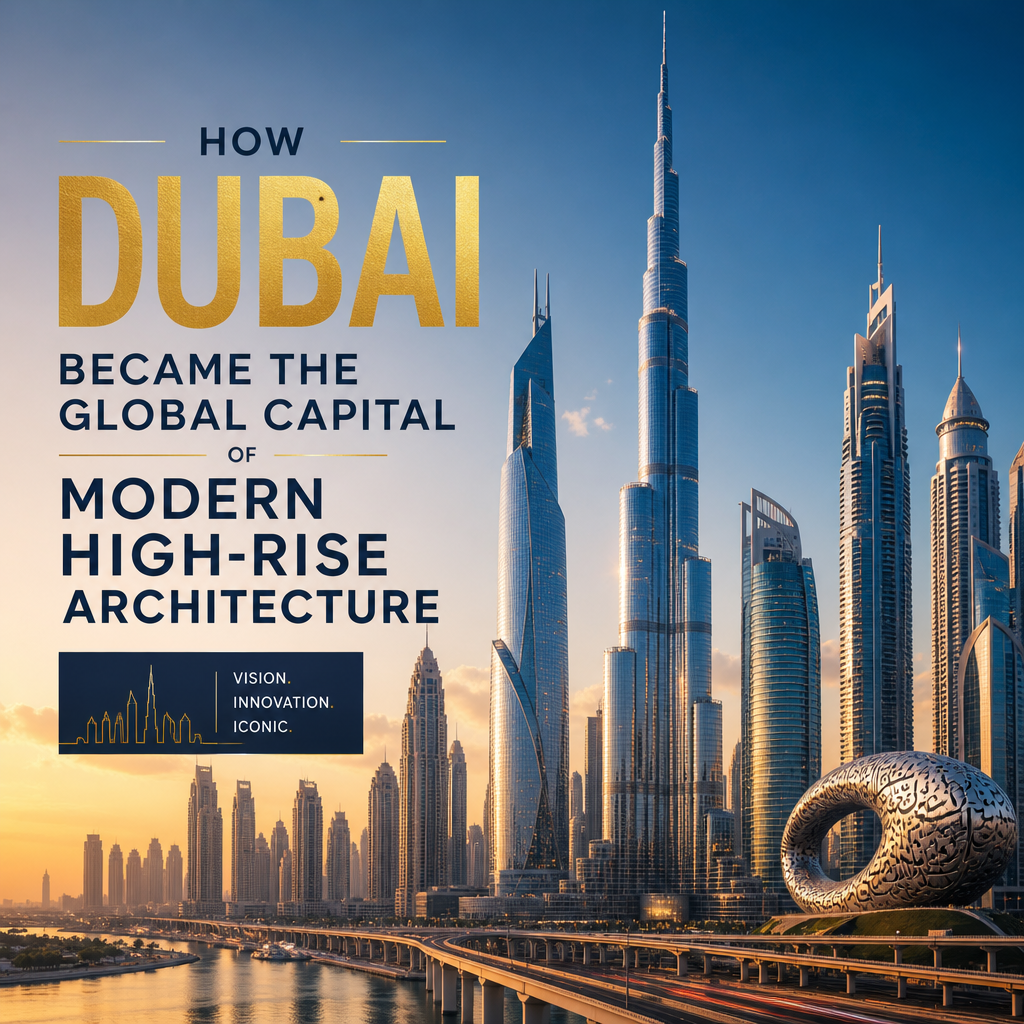
How Dubai Became the Global Capital of Modern High-Rise Architecture
How Dubai Became the Global Capital of Modern High-Rise Architecture
Dubai’s skyline is now recognized around the world, but its rise as a high-rise architecture capital happened in just a few decades. Towering landmarks, ambitious engineering, and a willingness to experiment transformed the city from a regional trading center into a global showcase for tall buildings.
That transformation was not driven by height alone. Dubai combined investment, strategic planning, international expertise, and a distinctive appetite for bold design.
From Trading Port to Global City
Before its rapid expansion, Dubai’s economy centered on trade, fishing, pearl diving, and maritime activity. The discovery of oil in the region helped fund development, but Dubai’s long-term strategy extended beyond oil revenues. Leaders invested in infrastructure, tourism, finance, logistics, and real estate to make the city an international destination.
As the population and economy grew, so did demand for offices, hotels, residences, and commercial space. Building upward offered a practical response to limited central land and rising demand. It also gave the young global city a way to make an immediate impression.
A Skyline Built on Ambition
Dubai’s approach to development has often favored projects that attract attention and express confidence. The city welcomed proposals that might have seemed too costly or unconventional elsewhere, helping architects and engineers test new ideas at an extraordinary scale.
The Burj Al Arab, completed in 1999, became one of the earliest symbols of this ambition. Designed to resemble a billowing sail, it showed that a building could function as both a hotel and a recognizable piece of visual identity. Its distinctive profile helped put Dubai on the global tourism map.
The city’s most famous milestone followed with the Burj Khalifa. Rising to 828 meters, it became the world’s tallest building when it opened in 2010. Its height drew headlines, but the project’s significance also lay in its engineering, construction logistics, and integration into a larger urban development. The tower demonstrated that Dubai could deliver a project of exceptional complexity and scale.
Why Dubai Became a High-Rise Architecture Hub
Several factors helped turn Dubai into a magnet for tall-building design.
International talent and expertise
Developers brought together architects, engineers, contractors, and specialists from across the world. This international collaboration allowed the city to draw on diverse design traditions and technical knowledge. It also gave major firms opportunities to work on projects that could redefine their portfolios.
Investment and efficient delivery
Large-scale investment made ambitious projects possible, while relatively streamlined development processes helped move them from concept to construction. Developers often worked on a scale that supported new materials, advanced building systems, and specialized engineering solutions.
A global stage
Dubai’s role as a tourism and business destination gave high-profile buildings a clear purpose. Towers could serve as hotels, workplaces, residences, and landmarks at once. Events, transport connections, and international marketing further amplified their visibility.
A culture of experimentation
The city’s built environment includes more than record-breaking towers. Twisting forms, layered façades, mixed-use districts, and carefully engineered foundations have all contributed to its architectural range. Some projects prioritize spectacle; others focus on density, comfort, or energy performance.
The Challenges of Building Tall in the Desert
Dubai’s climate makes high-rise construction especially demanding. Extreme heat affects materials, construction schedules, and building operations. Tall structures must also contend with wind forces, sand, glare, and the energy needed for cooling.
Architects and engineers address these conditions through choices such as high-performance façades, shading systems, efficient cooling, and careful orientation. Yet sustainability remains a central challenge. A landmark tower can be visually striking, but its long-term success also depends on how much energy and water it consumes and how well it serves the people who use it.
From Record-Breaking to Livable Design
Dubai’s next architectural chapter is likely to be judged less by height alone and more by how well buildings work within the city. High-rise districts need walkable streets, reliable public transport, shaded outdoor spaces, and a mix of homes, workplaces, and services.
The city is already expanding its design priorities to include greener construction, smarter infrastructure, and more people-focused public spaces. These goals do not erase Dubai’s appetite for bold architecture; they add new measures of achievement.
Dubai became a global capital of modern high-rise architecture by pairing extraordinary ambition with the resources and expertise to build at scale. Its skyline remains a symbol of that story—but the next test is ensuring that its most remarkable towers are not only impressive from a distance, but sustainable and welcoming from the ground up.
