

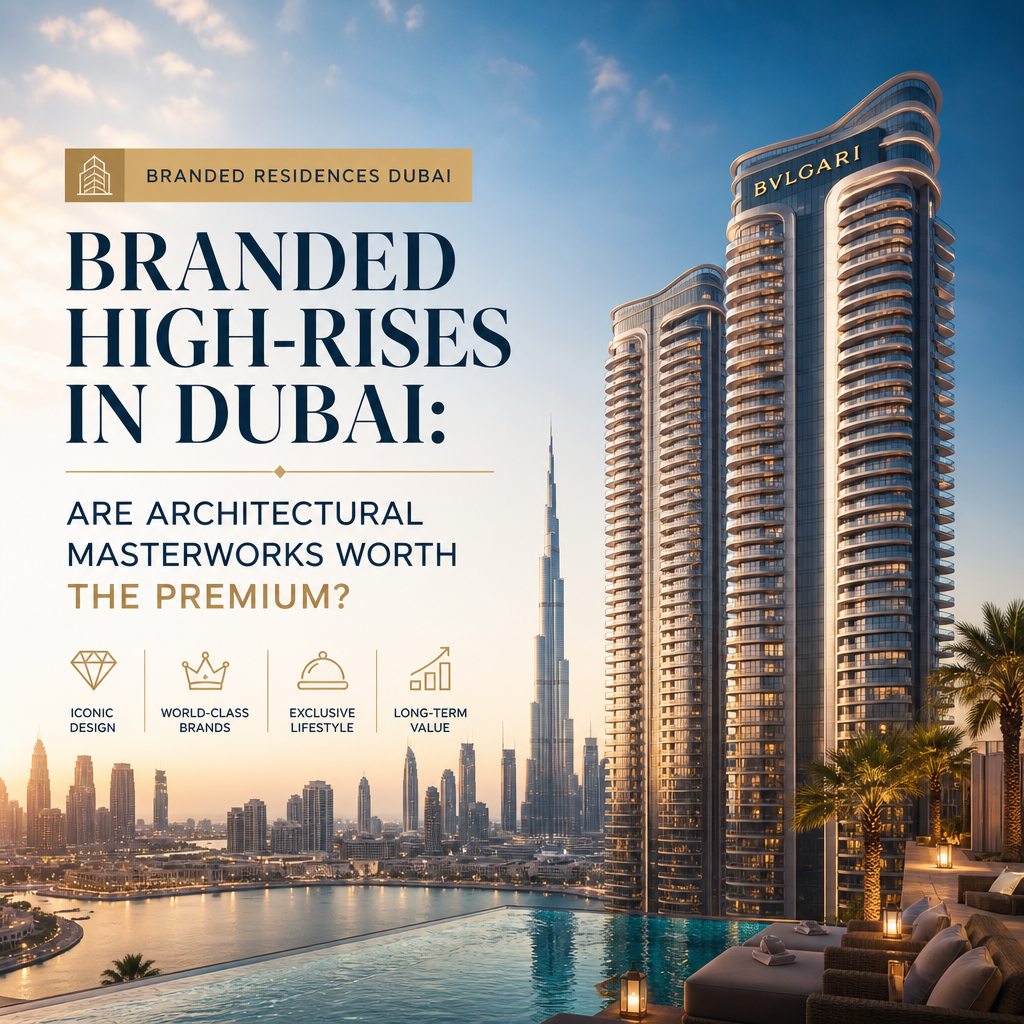
Branded High-Rises in Dubai: Are Architectural Masterworks Worth the Premium?
Branded High-Rises in Dubai: Are Architectural Masterworks Worth the Premium?
Dubai’s skyline is defined by ambition. From sculptural towers overlooking the coastline to residences associated with global fashion, automotive, and hospitality brands, the city has turned luxury real estate into an experience-driven market.
These developments promise more than an apartment with a view. They offer distinctive architecture, curated interiors, hotel-style services, and access to a carefully designed lifestyle. But with premiums often running significantly above comparable properties, many buyers ask an important question: are branded high-rises in Dubai truly worth the extra cost?

What Makes a High-Rise “Branded”?
A branded residence is typically developed in partnership with a recognized luxury brand. The brand may come from the hospitality, fashion, automotive, or design world, and its identity influences the building’s architecture, interiors, services, and resident experience.
Common features include:
- Concierge and valet services
- Housekeeping and in-residence dining
- Private lounges, wellness facilities, and pools
- Signature interior design
- Exclusive restaurants or social spaces
- Access to hotel-style amenities
- Strong emphasis on privacy and personalized service
The appeal lies in consistency. Buyers are not simply purchasing square footage; they are buying into a recognizable standard and a carefully managed environment.
Why Branded Residences Command a Premium
The premium attached to branded high-rises in Dubai usually reflects several layers of value.
Design and Architecture
Many branded towers are designed as architectural landmarks. Their facades, entrances, public areas, and interiors are often created by internationally recognized architects and designers.
This can make the property more visually distinctive than a conventional residential tower. In a city where signature architecture is closely tied to prestige, an iconic design may contribute to long-term desirability.
Hotel-Style Services
A conventional luxury apartment may offer excellent facilities, but branded residences often go further. Residents may have access to a dedicated team that handles everyday requests, from arranging transportation to organizing private events.
For owners who travel frequently or value convenience, this level of service can justify part of the additional expense. It also makes the property attractive to buyers seeking a lock-up-and-leave lifestyle.
Brand Recognition
A well-established brand can create immediate trust, particularly for international buyers who may be unfamiliar with Dubai’s developers and neighborhoods.
Brand recognition can also support resale and rental marketing. A residence linked to a globally respected name may stand out in a crowded market, especially when competing for high-net-worth tenants.
The Case for Paying the Premium
For the right buyer, the premium can be worthwhile. Branded high-rises are especially appealing to those who value:
- Convenience: Daily services reduce the responsibilities of property ownership.
- Exclusivity: Limited inventory and controlled access can create a stronger sense of privacy.
- Lifestyle: Wellness, dining, hospitality, and social amenities are integrated into one environment.
- Resale appeal: A recognizable brand may help the property remain competitive.
- Quality control: Professional management can protect the condition and reputation of the building.
The strongest value proposition often appears in prime locations such as Downtown Dubai, Dubai Marina, Palm Jumeirah, and the waterfront districts. In these areas, architecture and service can complement already strong demand.
When the Premium May Not Be Justified
Branding does not automatically guarantee superior investment performance. Buyers should examine what they are actually receiving for the additional cost.
Some developments charge a substantial premium for branding while offering layouts, views, or facilities that are similar to those found in non-branded projects. In such cases, the buyer may be paying primarily for the name.
There can also be higher ongoing expenses, including:
- Elevated service charges
- Costs for hotel-style amenities
- Interior maintenance requirements
- Management fees for rental programs
- Premium fit-out and furnishing expenses
Investors focused purely on rental yield may find that a well-located, non-branded apartment offers better value. A branded unit may achieve a higher rent, but that advantage must be measured against its purchase price and operating costs.
How Buyers Should Evaluate the Opportunity
Before purchasing, compare the branded residence with similar properties in the same neighborhood. Focus on practical numbers as well as emotional appeal.
Key questions include:
- How does the price per square foot compare with nearby luxury towers?
- Are service charges reasonable for the amenities provided?
- Is the brand actively involved in operations or only in marketing?
- What is the building’s rental demand and occupancy history?
- Are views, layouts, and finishes genuinely superior?
- Does the development have a strong location independent of its branding?
It is also essential to review the developer’s track record, handover timelines, ownership structure, and community management arrangements.
A Luxury Purchase, Not Always a Pure Investment
Branded high-rises in Dubai can offer exceptional design, convenience, and prestige. For end users, the combination of architecture, service, and location may make the premium entirely reasonable.
For investors, however, the decision requires greater discipline. The brand should support the property’s value, not replace careful analysis. Strong fundamentals—location, construction quality, views, floor plans, tenant demand, and management—remain more important than a famous name alone.
Ultimately, architectural masterworks can be worth the premium when they deliver a superior everyday experience and maintain genuine market demand. The smartest buyers look beyond the label and determine whether the design, services, and financial performance justify the price.