
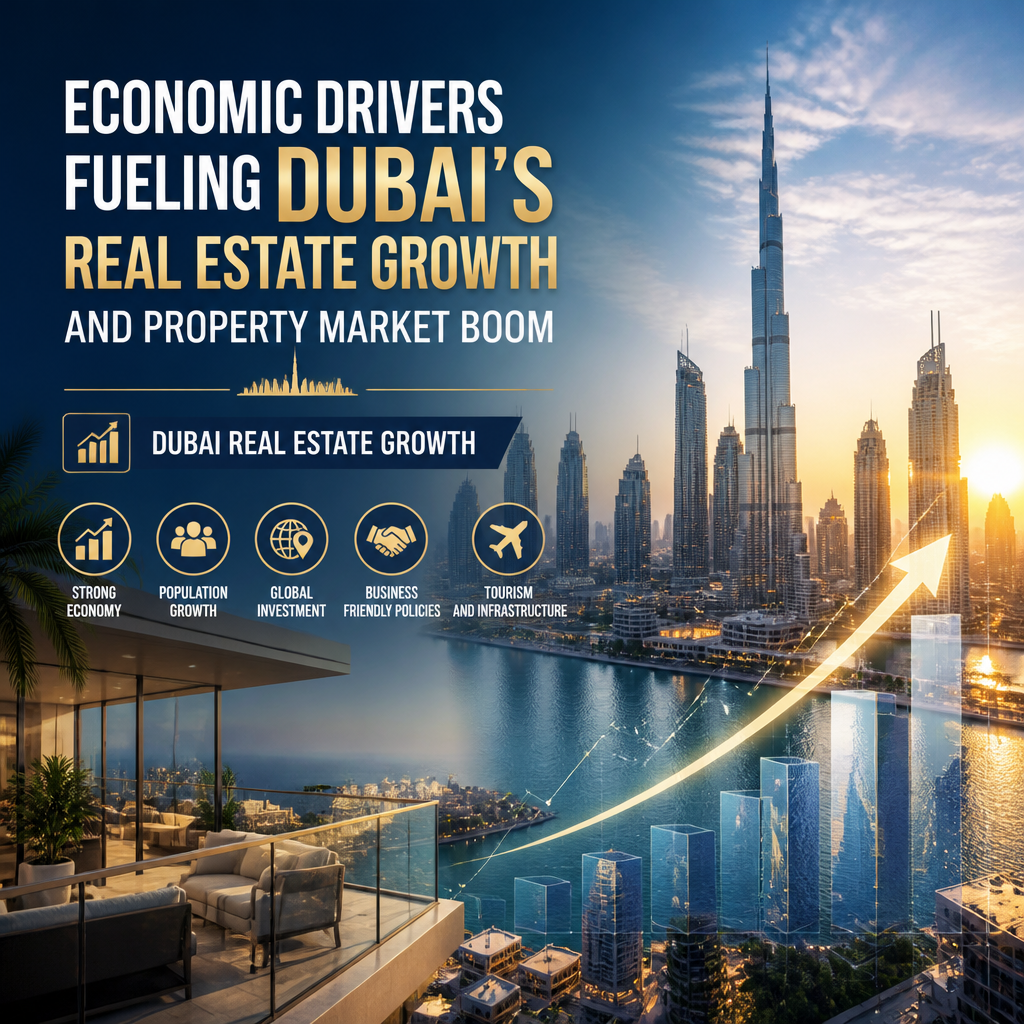
Economic Drivers Fueling Dubai’s Real Estate Growth and Property Market Boom
The Economic Drivers Fueling Dubai’s Real Estate Growth
Dubai’s real estate market is closely connected to the city’s wider economic transformation. Over the past two decades, investment in infrastructure, tourism, business services, and international trade has helped turn Dubai into a global destination for residents, companies, and visitors. These forces continue to shape demand for homes, offices, hotels, and retail space.
Understanding the economic drivers behind Dubai’s real estate growth offers a clearer picture of why the market attracts attention from local and international investors alike.
A Diversified Economy
Dubai’s economy is no longer defined by oil. Trade, logistics, finance, technology, tourism, and professional services now play major roles in its development. This diversification supports real estate demand by bringing businesses and workers to the city across a range of industries.
As companies establish offices or expand their operations, they need commercial premises and housing for employees. A broader employment base can also make the property market more resilient, as demand is not dependent on the fortunes of a single sector.
Population Growth and International Migration
Dubai attracts professionals, entrepreneurs, families, and investors from around the world. Employment opportunities, a business-friendly environment, modern amenities, and international connections all contribute to its appeal.
Population growth fuels demand for rental homes and owner-occupied properties. It also influences where and what developers build. Some residents look for apartments near business districts and public transport, while families may favor larger homes close to schools, parks, and community facilities.
Government initiatives, including long-term residency options for eligible groups, have helped encourage some residents to make longer-term plans in the UAE. Greater stability can support property purchases as well as rental demand.
Tourism and Global Events
Tourism is another important contributor to Dubai’s real estate market. Visitors support hotels, serviced apartments, restaurants, shopping destinations, and entertainment venues. A strong tourism sector can therefore create demand for hospitality properties and related commercial space.
Major events, conferences, and exhibitions bring international visitors and businesses to the city. Dubai’s role as a regional hub for travel and commerce helps maintain its profile throughout the year, supporting investment in visitor accommodation and leisure facilities.
Infrastructure and Urban Development
Transport links and public amenities can influence both property demand and long-term value. Dubai has invested heavily in roads, airports, public transport, utilities, and large-scale urban projects. These connections make it easier for residents and businesses to move around the city and access essential services.
Infrastructure projects may also encourage development in emerging neighborhoods. When a district gains improved transport, retail options, schools, or public spaces, it can become more attractive to residents and investors. Over time, these improvements may help spread demand beyond established central areas.
Planning for Future Growth
Dubai’s urban planning has increasingly emphasized connected communities, sustainability, and mixed-use development. Projects that combine homes with shops, offices, and leisure facilities can reduce reliance on long commutes and create convenient neighborhoods.
These priorities influence the types of properties developers bring to market. They also reflect a wider effort to support a growing population while improving quality of life.
Business Investment and Regulation
Dubai’s position as a regional business center attracts companies seeking access to markets across the Middle East, Africa, Asia, and Europe. Free zones, modern infrastructure, and business services have helped draw international firms and entrepreneurs.
When businesses invest, they often require office space, accommodation, and supporting services. Clearer property regulations and established transaction systems can also help investors assess opportunities with greater confidence. However, rules and market conditions can change, so buyers should verify current requirements before making decisions.
Foreign Investment and Market Appeal
Dubai’s property market is open to overseas buyers in designated ownership areas, giving international investors access to a range of residential and commercial opportunities. The city’s global reputation, connectivity, and diverse property options contribute to its appeal.
Investors may be drawn by rental income, potential long-term appreciation, or the opportunity to own a home in a major international city. Returns are not guaranteed, however. Property values and rents can fluctuate with supply, demand, financing costs, and broader economic conditions.
The Role of New Supply
Economic growth can encourage developers to launch new residential, commercial, and hospitality projects. New supply gives buyers and tenants more choice and can support the city’s expansion. At the same time, the pace and location of construction matter: an increase in supply may place pressure on prices or rents in certain segments.
For this reason, investors often consider more than headline growth figures. They assess neighborhood demand, transport access, construction quality, service charges, and the volume of competing properties.
A Market Shaped by Multiple Forces
Dubai’s real estate growth reflects the combined influence of economic diversification, population gains, tourism, infrastructure investment, and international business activity. These factors create opportunities, but they do not remove market risk. Careful research remains essential.
As Dubai continues to evolve, its property sector will be shaped by how effectively the city balances development with sustainable demand. That balance—between investment, livability, and long-term economic activity—is central to the market’s future.
