
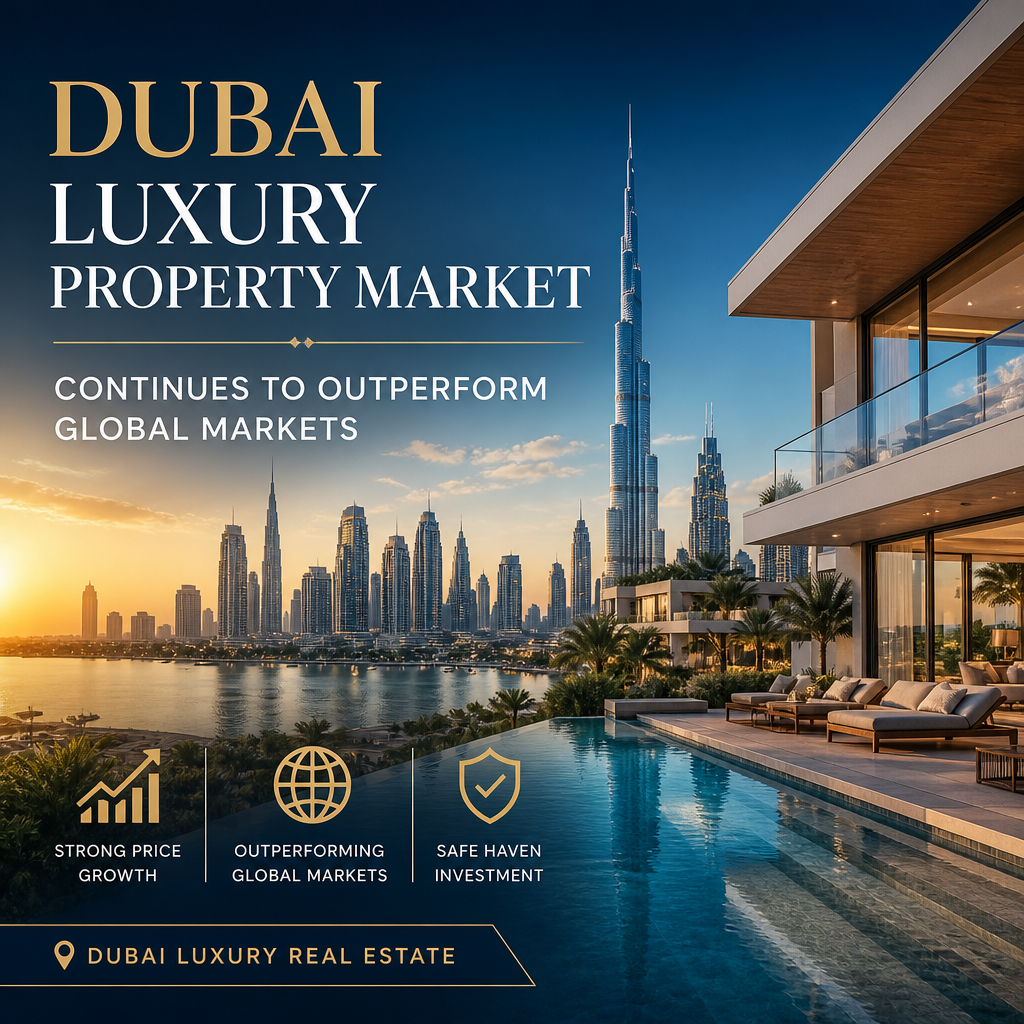
Dubai Luxury Property Market Continues to Outperform Global Markets
How Dubai Continues to Outperform Global Luxury Property Markets
Dubai has become one of the world’s most closely watched destinations for luxury real estate. Its appeal goes beyond striking architecture and waterfront addresses: the city combines global connectivity, investor-friendly policies, modern infrastructure, and a lifestyle designed around convenience. As established property hubs contend with higher costs and shifting economic conditions, Dubai continues to attract buyers seeking both a distinctive home and a long-term investment.
Its performance is not guaranteed or immune to market cycles. But a combination of practical advantages and sustained international interest helps explain why Dubai remains competitive in the global luxury property market.
A Global City with Strong International Connections
Dubai sits between major markets in Europe, Asia, and Africa, making it a natural base for international business and travel. Dubai International Airport connects residents to destinations across the world, while the city’s time zone allows companies to work across several regions in a single day.
This connectivity matters to luxury buyers, many of whom travel frequently or manage businesses in multiple countries. A home in Dubai can offer both a residential base and convenient access to international markets.
The city has also invested heavily in transport, healthcare, education, retail, and cultural attractions. These amenities support daily life as well as the city’s appeal to global professionals and families.
A Business Environment That Attracts Wealth
Dubai’s economic strategy has helped it diversify beyond its historic role in trade and energy. Finance, tourism, technology, logistics, and professional services all contribute to the city’s growth. This broader economy brings in entrepreneurs, executives, and investors who may eventually become property buyers.
The UAE also offers a tax environment that many international residents find attractive. Individual circumstances vary, and buyers should seek professional advice on taxes and residency rules, but the wider framework remains an important consideration for people comparing global cities.
In addition, residency pathways linked to investment and professional activity can make it easier for some buyers to establish a longer-term presence. Such policies support demand by connecting property ownership with broader plans for living and working in the region.
A Wide Range of Luxury Property
Dubai’s high-end market offers more than one type of luxury. Buyers can choose from branded residences, high-rise apartments, beachfront homes, golf communities, and large villas in established family neighborhoods. This range allows the market to serve different preferences, from a lock-and-leave city apartment to a private home with outdoor space.
Well-known districts such as Palm Jumeirah, Downtown Dubai, and Dubai Marina each offer a distinct setting. Newer communities and waterfront projects add further options, while established areas benefit from mature facilities and recognizable addresses.
For buyers, variety creates flexibility. It also means that careful comparison is essential: two luxury properties may differ significantly in location, service charges, construction quality, privacy, and long-term resale potential.
Lifestyle as Part of the Investment
In Dubai, lifestyle is a central feature of the luxury property proposition. Residents can find restaurants, beaches, shopping, leisure facilities, and international schools within easy reach of many neighborhoods. The city’s hospitality sector also supports a polished living experience, particularly in developments with concierge services and hotel-style amenities.
Safety is another factor frequently cited by residents and visitors. Combined with modern infrastructure and a large international community, this can make relocation more appealing for families and professionals.
For some buyers, the strongest value is not solely financial. A property may serve as a holiday home, a primary residence, or a base for regional business. That versatility can help support demand across different buyer groups.
Demand, Supply, and the Need for Due Diligence
Dubai’s luxury market has attracted buyers from many regions, including Europe, Asia, the Middle East, and North America. International demand can support activity when other markets face economic uncertainty, though it may also shift as global conditions change.
The city continues to add new developments, so supply deserves close attention. Not every project will perform equally, and headline price growth does not guarantee future returns. Buyers should assess:
- The developer’s record and the project’s completion status
- The location’s access to transport, schools, and daily services
- Comparable sales and rental demand
- Ongoing fees, maintenance, and ownership costs
- Legal terms, payment schedules, and resale conditions
Independent financial and legal advice can help buyers understand both the opportunities and risks involved.
What Keeps Dubai Competitive
Dubai’s advantage comes from the way its strengths work together. International connectivity supports business; business activity attracts residents; modern infrastructure improves daily life; and a broad housing market gives buyers a range of choices.
No city can outperform every competitor in every year, and luxury real estate remains sensitive to interest rates, regulation, supply, and global economic trends. Still, Dubai’s combination of lifestyle, accessibility, and investment appeal gives it a distinctive position among global property markets.
For buyers considering a luxury home, the city offers more than prestige. It offers a connected place to live, work, and invest—provided each opportunity is evaluated carefully and on its own merits.
