
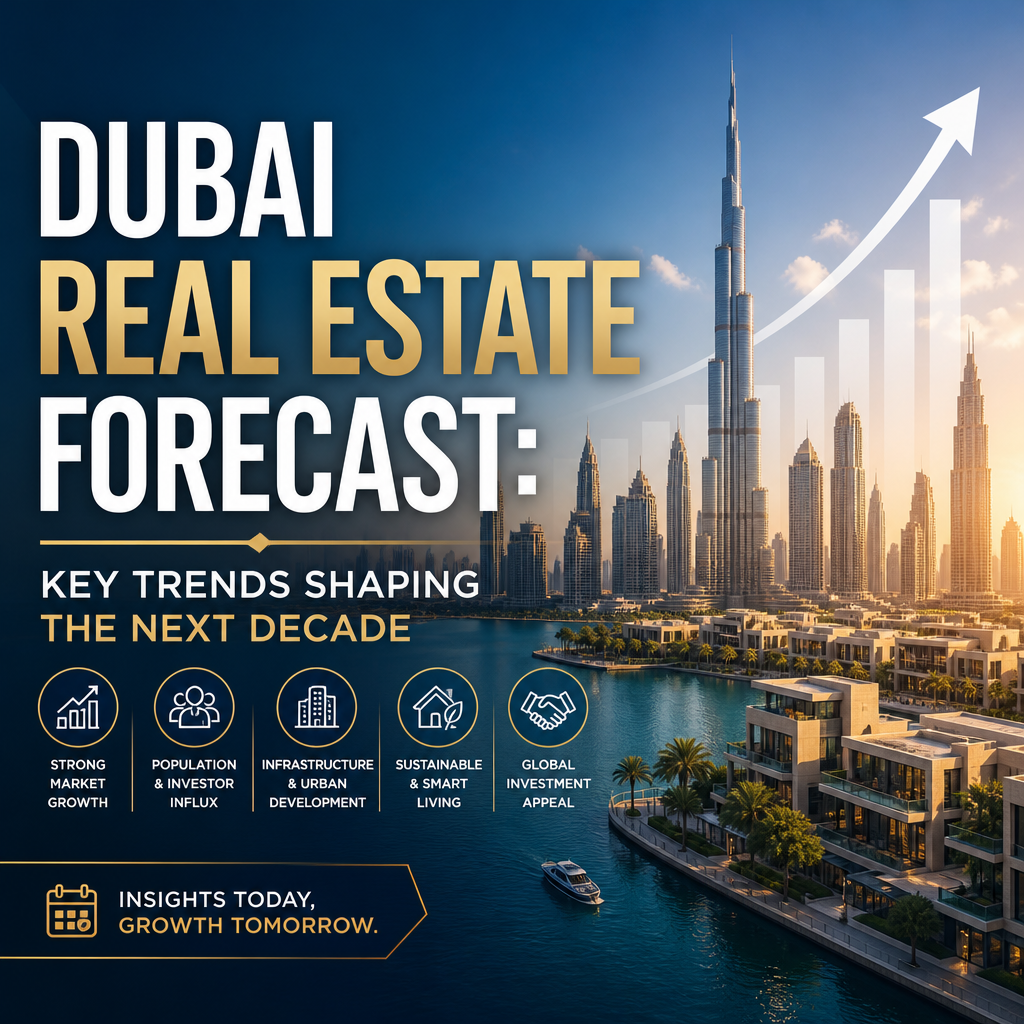
Dubai Real Estate Forecast: Key Trends Shaping the Next Decade
The Future of Dubai Real Estate: Predictions for the Next Decade
Dubai’s real estate market has evolved from a regional property hub into a global destination for investors, businesses, and residents. Over the next decade, its direction will be shaped by population growth, new technologies, sustainability goals, and changing expectations about how people live and work.
No forecast is certain, but several trends are likely to influence the future of Dubai real estate—and create opportunities as well as challenges for buyers, developers, and renters.
Continued Growth, With More Diverse Demand
Dubai’s expanding population is expected to remain a major driver of housing demand. The city continues to attract professionals, entrepreneurs, families, and international investors, while long-term residency initiatives may encourage more newcomers to settle permanently.
That growth could support demand across a wider range of property types. Luxury homes will likely remain a prominent part of the market, but demand for mid-market apartments, family housing, and rental properties may also increase. Buyers are increasingly considering access to schools, healthcare, public transport, and everyday amenities—not just a building’s design or address.
As a result, communities that combine housing with retail, parks, and services may become more appealing than developments focused solely on residential towers.
Sustainability Moves Into the Mainstream
Environmental performance is likely to become a more important measure of a property’s value. Dubai’s climate makes energy efficiency especially relevant, with cooling needs, water use, and construction materials all affecting a building’s environmental footprint and operating costs.
In the coming years, developers may place greater emphasis on:
- Efficient cooling and insulation
- Solar power and smart energy systems
- Water-saving fixtures and landscaping
- Lower-impact construction materials
- Walkable neighborhoods with green space
Sustainable design may shift from a premium feature to a basic expectation, particularly as regulations and buyer preferences evolve. Buildings that reduce utility costs and provide comfortable indoor environments could hold a competitive advantage.
Technology Will Transform Property Experiences
Digital tools are already changing how people search for and manage property. During the next decade, artificial intelligence, virtual tours, and data-driven platforms could make the process faster and more personalized.
Prospective buyers may be able to compare neighborhoods, prices, rental yields, and nearby services through increasingly detailed digital platforms. Smart-home systems could also become more common, allowing residents to manage lighting, security, and energy use through connected devices.
For landlords and property managers, automation may simplify maintenance requests, rent collection, and building operations. These tools could improve convenience, but they will also raise expectations: residents may increasingly expect quick service, transparent communication, and reliable digital access.
New Mobility Could Redefine Location
Transport infrastructure has always influenced property values, and this is unlikely to change. Expanded public transit, improved road connections, and future mobility options could make more parts of Dubai attractive to residents and businesses.
The value of a location may increasingly depend on how easily people can reach work, schools, entertainment, and essential services. Areas with strong transit links and pedestrian-friendly planning could benefit as residents seek alternatives to long car journeys.
This may also broaden the geography of demand. As connections improve, buyers and renters could consider neighborhoods beyond the city’s most established districts, particularly where new communities offer more space or better value.
Flexible Living and Working Spaces
Remote and hybrid work have changed what many residents expect from a home. Over the next decade, properties may increasingly include flexible rooms that can serve as offices, study areas, or guest spaces. Shared work facilities within residential communities could appeal to residents who want a professional setting close to home.
The rental market may adapt as well. Furnished homes, shorter lease options, and serviced residences could attract mobile professionals and people relocating to Dubai. At the same time, families seeking stability may continue to favor longer-term rentals and ownership in established communities.
A More Mature Market
Dubai’s property market has experienced rapid cycles of growth and correction. Over the next decade, stronger data, clearer regulations, and more experienced buyers may contribute to a market that is better equipped to manage change. Even so, property remains a long-term investment, and returns can vary significantly by location, property type, and timing.
Investors will need to look beyond headline prices and consider factors such as service charges, rental demand, construction quality, and future infrastructure. For residents, the key question may be less about short-term price movements and more about whether a home supports their lifestyle and long-term plans.
Looking Ahead
The future of Dubai real estate will likely be shaped by a combination of growth, innovation, and practical concerns such as affordability and sustainability. The strongest developments may be those that offer more than impressive architecture: they will need to meet residents’ everyday needs, use resources efficiently, and connect people to the wider city.
For buyers, renters, and investors, understanding these shifts can make it easier to assess opportunities. Dubai’s next decade will bring change, but its ability to adapt has long been one of the market’s defining strengths.
