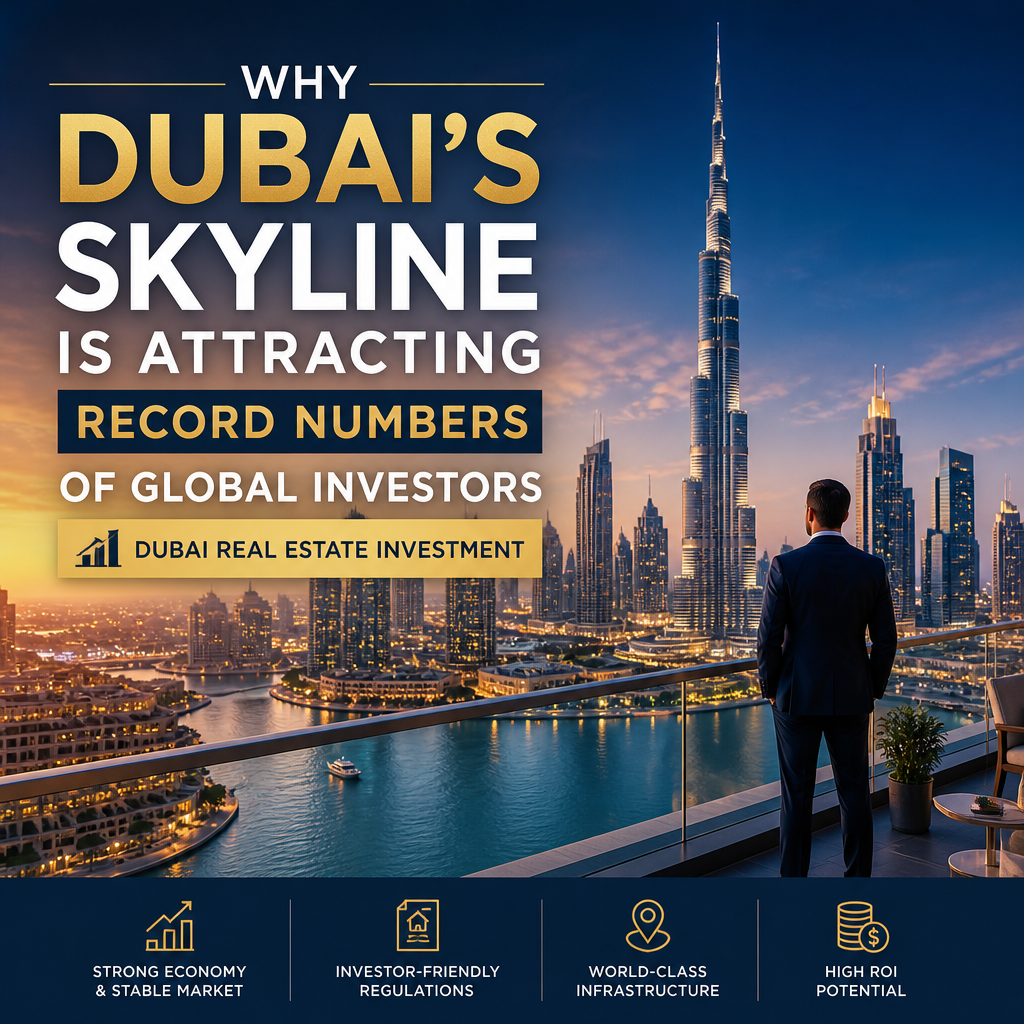
Why Dubai’s Skyline Is Attracting Record Numbers of Global Investors
Why Dubai’s Skyline Is Attracting Global Investors in Record Numbers
Dubai’s skyline is more than a collection of striking towers. It reflects the city’s rapid growth, global ambitions, and appeal to people seeking new places to live, work, and invest. From the Burj Khalifa to ambitious waterfront developments, each project contributes to a changing property market that continues to draw international attention.
Investors are attracted not only by distinctive architecture but also by the wider conditions behind it. Economic growth, infrastructure investment, international connectivity, and a range of real estate options have helped make Dubai a prominent destination for global capital.
A Global City With Strong Connectivity
Dubai’s location between Europe, Asia, and Africa gives it a natural advantage as a business and travel hub. Dubai International Airport connects the city with destinations around the world, while its ports, road network, and public transport support regional trade and daily life.
This connectivity matters to property investors. A city that is easy to reach—and where businesses can operate across time zones—can attract companies, workers, tourists, and residents. Their presence, in turn, creates demand for homes, hotels, offices, and retail spaces.
Dubai’s government has also pursued policies aimed at attracting international businesses and skilled professionals. These efforts support population growth and help sustain demand across different parts of the property market.
Diverse Real Estate Opportunities
One reason Dubai appeals to investors is the breadth of its property options. Buyers can consider apartments in established central districts, family homes in suburban communities, luxury residences along the coast, or commercial space in business hubs.
The city’s skyline highlights some of its most recognizable projects, but investment opportunities are not limited to landmark towers. New communities are planned around schools, parks, shops, and transport links, offering alternatives to high-rise living. This variety gives investors room to assess different budgets, tenant groups, and long-term strategies.
Common considerations include:
- Rental demand: Areas near business districts, transport, and leisure attractions may appeal to tenants.
- Property type: Apartments, villas, offices, and hospitality assets serve different market needs.
- Development stage: Completed properties and off-plan projects can carry different costs, timelines, and risks.
- Location: Access to services and planned infrastructure can influence a property’s appeal.
Careful research is essential. A visually impressive building does not guarantee a strong investment, and potential returns depend on factors such as purchase price, service charges, occupancy, and market conditions.
A Business Environment That Supports Demand
Dubai’s property market is closely connected to the city’s wider economy. Its strength in sectors such as tourism, finance, logistics, technology, and trade helps draw companies and workers from abroad. That movement can increase demand for residential and commercial property.
The city also offers a range of business zones and residency pathways, subject to current regulations and eligibility requirements. For some international investors, the chance to combine property ownership with a broader business or lifestyle presence is part of the appeal.
Tourism adds another layer of demand. Visitors support hotels, serviced apartments, restaurants, shopping destinations, and entertainment venues. As the city expands its cultural and leisure offerings, new districts and developments can benefit from increased foot traffic and international visibility.
Architecture as a Signal of Ambition
Dubai’s landmark buildings are visible signs of its willingness to invest in large-scale projects. The skyline helps position the city as a place where ambitious plans can become reality, strengthening its profile among investors, companies, and potential residents.
But architecture alone does not explain investor interest. Major developments are often accompanied by transport links, public spaces, retail, and hospitality facilities. When these elements work together, a project can contribute to a more complete neighborhood rather than simply adding another tower to the horizon.
The most enduring appeal often comes from this combination: recognizable design supported by practical infrastructure and services.
Weighing the Risks Alongside the Opportunity
Like any real estate market, Dubai’s property sector can experience changes in prices, supply, and demand. Investors should review project details, ownership rules, payment schedules, developer track records, and ongoing costs before committing. Currency movements and broader economic conditions may also affect overseas buyers.
Independent legal and financial advice can help investors understand the terms of a purchase and assess how a property fits their goals. It is also useful to compare neighborhoods rather than relying on headline prices or promotional forecasts.
A Skyline Shaped by Global Confidence
Dubai’s skyline attracts global investors because it represents more than visual spectacle. It points to a connected economy, varied property choices, continued development, and a city actively competing for businesses and residents. Those forces have helped place Dubai on the international investment map.
For investors, the opportunity is not simply to buy into a famous view. It is to understand the demand, infrastructure, and long-term plans behind each location. With careful research, Dubai’s evolving skyline can offer a window into one of the world’s most dynamic urban property markets.